 The “Sustainability Webinar” on the topic of sustainability was successfully held on 26/01/2021 with high participation. The “Sustainability Webinar” was held within the framework of the 2nd Innovation Competition “NOYNOY Idea Challenge Sustainability”, an initiative of FrieslandCampina Hellas-NOYNOY, in partnership with the Industrial and Energy Economics Laboratory (LIEE) of the National Technical University of Athens and the know-how transfer consulting company Break-Even Consulting.
The INFOSTRAG Team of the Industrial and Energy Economics Laboratory (IEEL) of NTUA organized the 15th Seminar on the Information Society & the Knowledge Economy during the period 17-19 July 2020 at the Events Hall of the Cyclades Chamber. The Seminar was co-organized by the Cyclades Chamber, the Konrad Adenauer Foundation, the Open Technologies Organization – EELLAK/ELLAK and the Invent ICT Program.
Due to the special conditions created by the Covid-19 pandemic, this year’s Seminar had a hybrid format, i.e. some of the presentations were given in person and the rest online. It was also broadcast live on the LIEE/NTUA YouTube channel. In terms of its content, emphasis was inevitably placed on various dimensions of the health crisis and its impacts on the functioning of the public sector and on economic and social activity. The Seminar included 5 thematic modules.
The first module, which was held in two parts on Friday morning and afternoon, concerned the issue of the digital transformation of the state, economy and society, and the impact of the pandemic crisis on it. Within its framework, presentations were made that addressed many aspects of this broad and important topic, such as the degree of response of public administration, local government and the country’s education and research system to the demands posed by the crisis, initiatives by public sector bodies to encourage the provision of innovative solutions by third parties (start-ups, researchers, etc.), as well as the challenges and opportunities created by the pandemic crisis to accelerate the digital transformation of the productive sector. It is noted that the opening speech of the first section, given by Emeritus Professor of NTUA Danae Diakoulaki, concerned an analysis of the evolution of the Pandemic in Europe based on quantitative data from the World Health Organization.
Saturday morning was divided into two thematic sections. The first was dedicated to the keynote speech of Professor Orestis Terzidis, head of the Institute for Entrepreneurship, Technology Management and Innovation (EnTechnon) at the Karlsruhe Institute of Technology. His speech and the discussion that followed were about the paradigm shift in production brought about by the technologies of the 4th industrial revolution, which can be applied not only in industry but also in many other sectors, as well as the opportunities that these changes in production processes and supply chains entail for countries such as Greece.
The second part of the Saturday morning concerned the issue of innovative entrepreneurship and the opportunities that the pandemic crisis creates in this direction. In this context, Dr. Evangelos Siokas (NTUA) presented the report on the activities of the entrepreneurship support structures at NTUA, namely the Innovation and Entrepreneurship Unit of NTUA (2011- present), the EPI.noo Incubator (2014 – present) and the Invent ICT Program (2017 – present) [EPISEY-NTUA]. In addition, a presentation was made of innovative business schemes that have been supported by the EPI.noo Incubator and the Invent ICT Program, some of which concern the provision of solutions to address the pandemic. The last presentation of this section was made by Assoc. Prof. NTUA and Director of the EVEO Angelos Tsakanikas, and concerned the opportunities that the country’s pharmaceutical industry has to achieve a new growth dynamic in the post-Covid-19 era.
On Saturday afternoon, the fourth thematic session was held, which focused on global value chains and the role of the Greek production system in the new environment that is taking shape after the pandemic crisis. The session began with the keynote speech of Nikos Vonortas, Professor of Economics and International Relations at George Washington University, and Director of the Institute for International Policy on Science and Technology. His speech highlighted the transformation that the globalization of the economy and global value chains are undergoing due to structural factors such as the 4th industrial revolution, the growing economic nationalism characterized by the geopolitical and economic confrontation between China and the United States, and the international goals that have been set in relation to the protection of the environment and the climate of the planet, to which the recent pandemic crisis has been added. This was followed by the speech of Professor Emeritus of NTUA Yiannis Kalogirou (together with Angelos Tsakanikas, Emilia Protogerou and Panagiotis Panagiotopoulos) which concerned the strengthening of the country’s structural competitiveness in the current crisis environment through the strengthening of the operation of the main axes of the knowledge economy quadrant (research and technological development, innovation, knowledge-intensive entrepreneurship and building capacities and skills). Subsequently, Nikos Diakoulakis (Investment Advisor, Former Special Secretary of the Ministry of Development) gave a speech that focused on the structures and implementation mechanisms of development programs. This was followed by the presentation of Angelos Tsakanikas (NTUA), Michalis Vassiliadis (IOBE) and Petros Dimas (NTUA) on an innovative approach to quantifying the participation of intangible assets in global value chains. The next presentation was given by Eugenia Topaloglou, Chemical Engineer, NTUA, and referred to the value chain of the food, beverage and tobacco sector in Greece, while the session closed with the presentation of Deputy Doctor of NTUA Dimitris Stamopoulos, who addressed the changes that electric mobility technologies are bringing to the automotive market, also referring to the role of the current crisis.
The fifth and final session of the Seminar, which took place on Sunday morning, was characterized by a variety of topics. The first speech was given by Maria Kavvadia, Dr. History of Sciences and Medicine (European University Institute), in which historical examples of diseases that took a pandemic and epidemic form were examined, highlighting continuities and discontinuities in the way they were dealt with, in the epistemological developments they brought about, in their scientific as well as socio-cultural approach, and in the social and cultural impact they had. Subsequently, Dr. Prodromos Tsiavos, Head of Digital Development of the cultural organization Stegi of the Onassis Foundation, presented the digital innovation activities carried out by the Stegi during the pandemic, which highlighted the opportunities that the cultural sector has in the country. The last speech was that of Petros Stefaneas, Asst. Professor of NTUA, which concerned issues of correctness and verification of mathematical models that examine pandemic phenomena. The Seminar closed with the discussion of the Conclusions.
Download the Seminar Program here
View the Seminar Presentations here
Watch all the thematic sections of the Seminar here
The Seminar included the following thematic sections:
Friday, July 17, morning (10:00 – 13:30)
The Covid-19 crisis and its impact on the Digital Transformation of the State and the Economy (Part A)
Friday, July 17, afternoon (18:00 – 21:30)
The Covid-19 crisis and its impact on the Digital Transformation of the State and the Economy (Part B)
Saturday, July 18, morning (10:00 – 11:00)
The 4th Industrial Revolution before and after the crisis Covid-19: Impacts, lessons, challenges and opportunities for Europe and Greece
Saturday 18 July, morning (11:00 – 13:30)
The business opportunities and new business models created by the Covid-19 crisis through and the use of research
Saturday 18 July, afternoon (18:00 – 21:30)
The Covid-19 crisis and the issue of economic globalization, Global Value Chains (GVCs), the mobility of people, goods and services
Sunday 19 July, morning (10:30 – 11:30)
The pandemic of a “new” disease: Historical continuities and discontinuities
Sunday 19 July, morning (11:30 – 12:30)
Seminar conclusions: General Discussion
The INFOSTRAG Group of the Industrial and Energy Economics Laboratory of the National Technical University of Athens is organizing the 15th Seminar on the Information Society & the Knowledge Economy from 17-19 July 2020 at the Cyclades Chamber of Commerce and Industry Event Hall.
The Seminar is co-organized by the Cyclades Chamber of Commerce, the Konrad Adenauer Foundation, the Open Technologies Organization – EELLAK/ELLAK and the Invent ICT Program.
Inevitably, the interest of this year’s seminar focuses on the way in which the current health crisis and its consequences are reshaping aspects of social and economic activity in the country.
The Seminar includes the following thematic sections:
Friday, July 17, morning (10:00 – 13:30)
The Covid-19 crisis and its impact on the Digital Transformation of the State and the Economy (Part A)
Friday, July 17, afternoon (18:00 – 21:30)
The Covid-19 crisis and its impact on the Digital Transformation of the State and the Economy (Part B)
Saturday, July 18, morning (10:00 – 11:00)
The 4th Industrial Revolution before and after the Covid-19 crisis: Impacts, lessons, challenges and opportunities for Europe and Greece
Saturday, July 18, morning (11:00 – 13:30)
Business opportunities and new business models created by the Covid-19 crisis through and the use of research
Saturday, July 18, afternoon (18:00 – 21:30)
The Covid-19 crisis and the issue of economic globalization, Global Value Chains (GVCs), the mobility of people, goods and services
Sunday, July 19, morning (10:30 – 11:15)
The pandemic of a “new” disease: Historical continuities and discontinuities
Sunday, July 19, morning (11:15 – 12:30)
Seminar conclusions: General Discussion
The detailed program of the Seminar can be found here.
To participate in the Seminar, please complete the registration form at the following link:
https://docs.google.com/forms/d/e/1FAIpQLSfuYF214KZ4iZyIeNeruB6EqfIQYcdKRtDkaBlks6ykC34W0A/viewform
Those of you (apart from the speakers of course) who wish to participate in person, please also inform us via email (at the addresses: panag.panag82@gmail.com, george.siokas@gmail.com) in which you will also indicate which thematic sections you wish to attend, as there is a limit to the number of people who can attend the room due to the relevant measures for the coronavirus.
By registering for the Seminar, you will be able to watch it interactively through the Webex online platform, which allows you to make interventions during the discussion that will follow the presentations of each section. The relevant link will be sent to you the day before to the email you have indicated in the registration form. Alternatively, you will be able to watch the Seminar live through the EBEO-NTUA Youtube Channel.
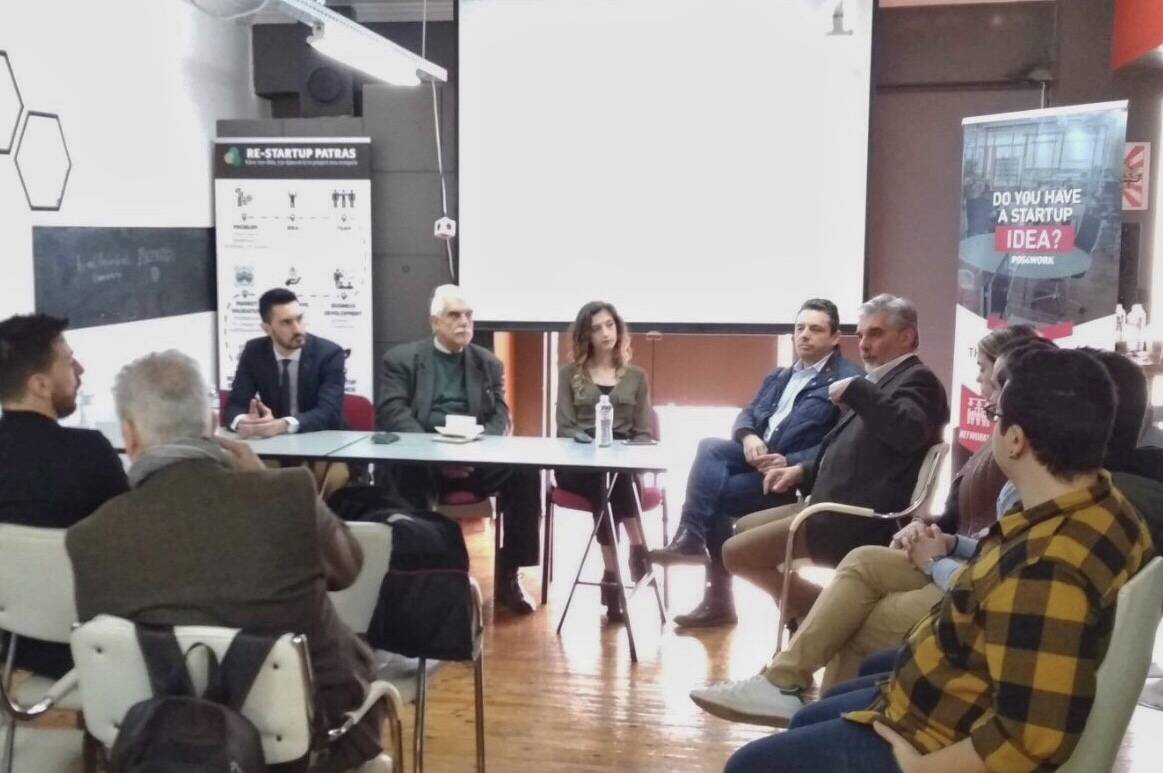
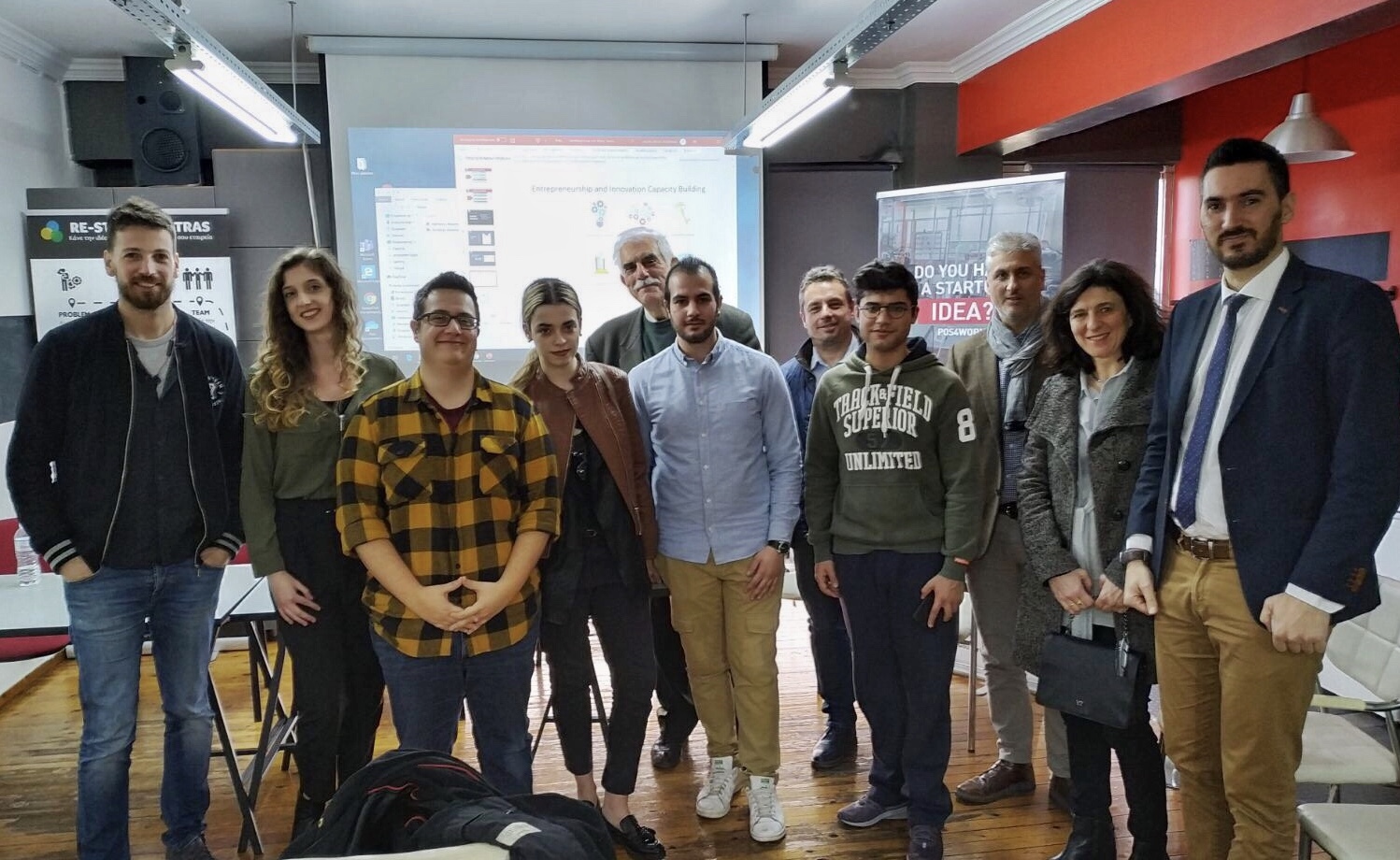
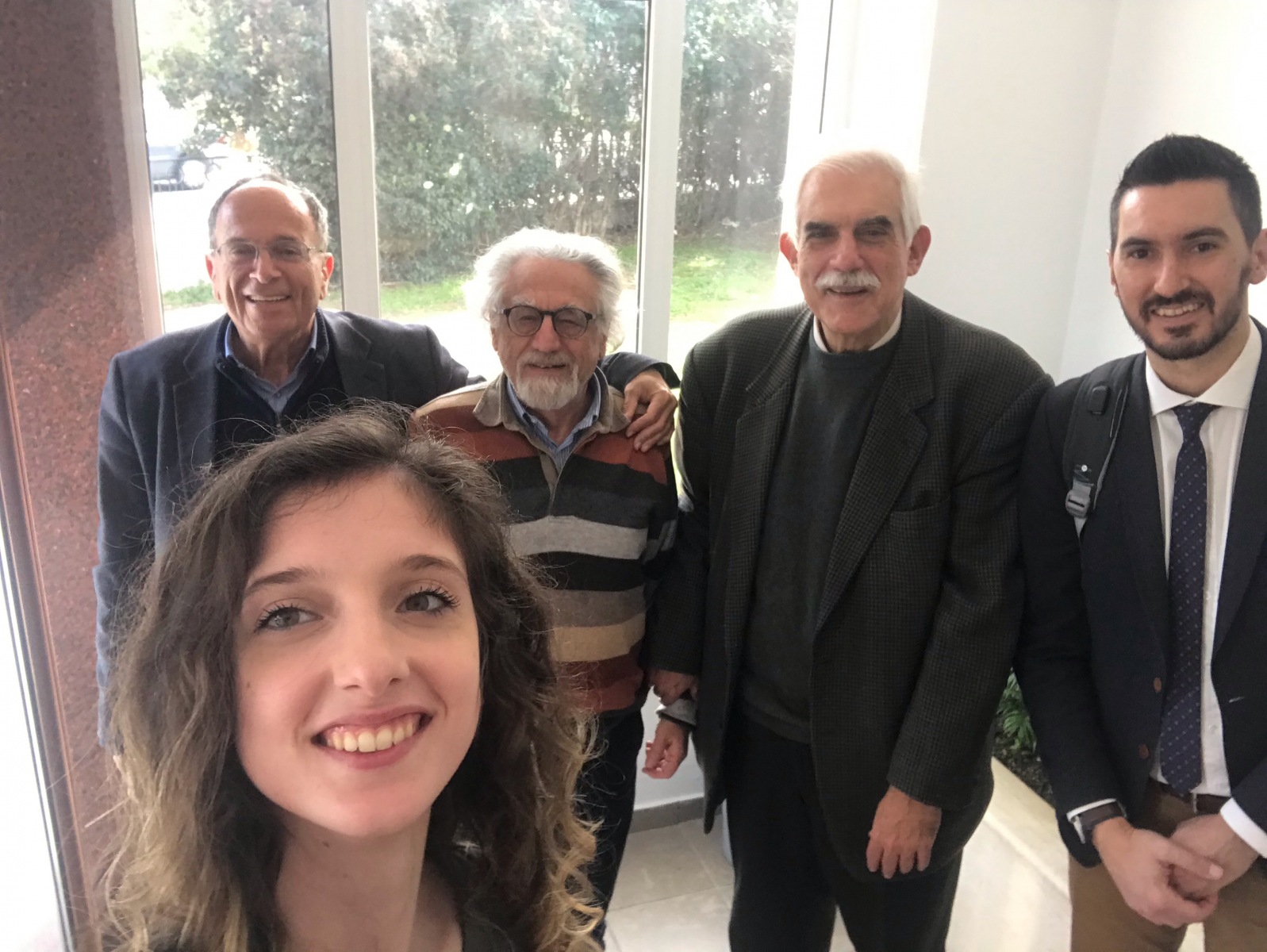
On Tuesday, February 11, an event was held to promote the 3rd cycle of the Invent ICT program in Patras. During the event, Evangelos Siokas, Project Manager of Invent ICT, presented the project work to the attending business groups, while Eleni Mitsea then presented the submission process. In addition, a broad exchange of views took place on the challenges and prospects of the innovation ecosystem of Patras, in which, among others, Emeritus Professor Yiannis Kalogirou, from the National Technical University of Athens, Professor Dimosthenis Polyzos, Deputy Rector of the University of Patras and Professor Spyros Sirmakesis from the University of Peloponnese participated.
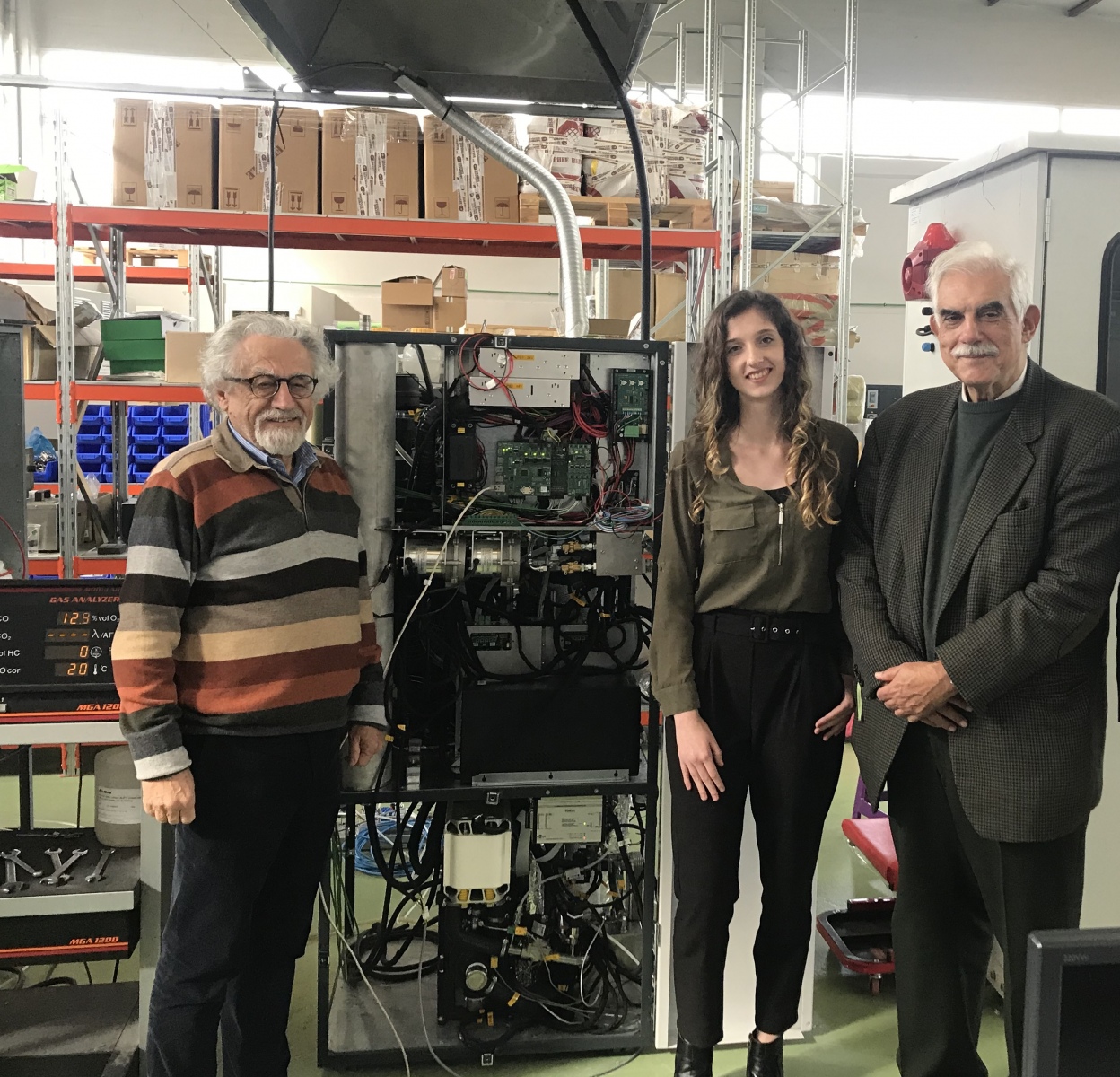
The event was held in collaboration with Mindspace Patras and POS4work. Alongside the event, Invent ICT representatives had the opportunity to meet with research teams from the University of Patras to inform them about the program’s benefits and discuss their business ideas. Finally, they visited the facilities of Helbio, a spin-off company of the university, which specializes in the design and construction of energy and hydrogen production systems.