 The next cycle of studies of the distinguished trans-European Master’s Program “Economic Policies for the Global transition” (EPOG+) begins in September 2023. EPOG+ falls under the category of Erasmus Mundus Joint Master Degrees, which are provided by international consortia of higher education institutions and supported by the European Union. It is two years in duration and includes the provision of scholarships.
It is a comprehensive, world-class master’s program in Economics and Economic Policies related to the green, digital and socio-economic transition, adopting a pluralistic and interdisciplinary approach. Its aim is to train a new generation of international experts for the public and private sectors, who will be able to shape and evaluate economic policies, and evolve within different political, social and regional environments. To this end, it is not limited to conventional economic theory but incorporates heterodox approaches to political economy.
Students can choose one of the following 3 main study tracks:
a) Knowledge, Innovation and Digital Transition,
b) Macroeconomics, Financial and Socioeconomic Transition, and
c) Growth, Sustainable Development and Ecological Transition.
They can also participate in courses, seminars and activities belonging to the other two tracks.
EPOG+ is coordinated by the French École Polytechnique de Compiègne (a public research university with grande école status). The Program involves over 30 (academic and non-academic) collaborating institutions from Europe and the rest of the world, including the Industrial and Energy Economics Laboratory of the National Technical University of Athens, which has undertaken the teaching of a course on Innovation, as well as the supervision of theses in the 4th semester of studies.
More information about the content of the Program, student mobility opportunities and the services provided can be found here.
Scholarships
EPOG+ provides a scholarship opportunity valid for the entire duration of the Program (2 years) to higher education graduates from the countries of the European Union, as well as many other countries in Europe and the World. See more information here.
Application deadline: January 30, 2023, 12:00 (Greece time). The application must be accompanied by two letters of recommendation.
More information can be found on the EPOG+ website.
 The Industrial and Energy Economics Laboratory (LIEE) of the National Technical University of Athens (NTUA) will participate in the event “Career Paths”, which will take place on Saturday, December 10 from 11:00 to 17:00 at the Goethe-Institut Athen (Omirou 14-16, Athens) as part of the STAYnet program.
The event is held in Greek and participation is free.
It is aimed at students, teachers, parents and anyone interested in discovering more about their skills and talents.
Interesting talks, presentations and workshops will be held around educational robotics, biotechnology, STEM professions and soft skills. The professional prospects of engineers in Greece and abroad, the world of model railways and organic farming will also be presented and the opportunity to discuss with professionals from various fields will be given.
From the LIEE-NTUA, Angelos Tsakanikas, Associate Professor of NTUA, Director of LIEE-NTUA, Emilia Protogerou, Assistant Professor of NTUA (elected) and Panagiotis Panagiotopoulos, Postdoctoral researcher will participate. The LIEE-NTUA will hold a presentation in the 1st part of the event and a Seminar in 2 sessions (13:30 – 14:50 & 15:30 – 16:50) in the 2nd part of the event entitled “Professional Paths of Engineers in Greece and Abroad”.
More information can be found in the program (Part A & Part B) as well as on the event website.
Registration is possible until Thursday, December 8th via the online form.
Attention: In some workshops/seminars/discussions the number of participants is limited.
We would be happy if you honored us with your presence and of course you can forward the invitation to other interested parties and your partners.
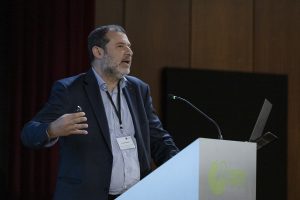
–Update 13/12: Below are snapshots from A. Tsakanikas’ speech during the event


The Center for Renewable Energy Sources and Saving (CRES) in collaboration with the Industrial and Energy Economics Laboratory of NTUA invite you to the event entitled “RES Technology Training Modules for STEM Undergraduates”, which is organized within the framework of the European Erasmus+ SETechTra Project at the Multimedia Amphitheater of the NTUA Library on Wednesday, November 2, 2022, at 3:00 PM.
The SETechTra project has as its main purpose the development of a curriculum for higher education students in the field of Renewable Energy Sources (RES). The project objectives are:
- Providing the appropriate knowledge/skills for the easy transition of graduates to the labor market.
- Promoting entrepreneurship and strengthening the skills of graduates, with the aim of creating a business by themselves in the field of RES.
- Identifying and filling the gaps between the education provided and the job market.
The following partners participate in the project:
- UoW – University of Wolverhampton, United Kingdom (Coordinator)
- TU – Teesside University, United Kingdom
- SAMK – Satakunnan University of Applied Science, Finland
- CRES – Centre for Renewable Energy Sources and Saving, Greece
- NTNU – Norwegian University of Science and Technology, Norway
- REKC – Research and Knowledge Consultancy, United Kingdom
The event is aimed at undergraduate and postgraduate students as well as young researchers. It concerns the presentation of the results of the SETechTra project and the introduction of participants to the RES sector, its operation and the employment prospects in this sector in Greece.
The event will take place in English and in a hybrid format.
To register, please complete the participation form that you will find here.
The official invitation to the event can be found here.
The event program can be found here.
 The Center for Renewable Energy Sources and Saving (CRES) in collaboration with the Industrial and Energy Economics Laboratory of NTUA invite you to the event entitled “RES Technology Training Modules for STEM Undergraduates”, which is organized within the framework of the European Erasmus+ SETechTra Project at the Multimedia Amphitheater of the NTUA Library on Wednesday, November 2, 2022, at 3:00 PM.
The SETechTra project has as its main purpose the development of a curriculum for higher education students in the field of Renewable Energy Sources (RES). The project objectives are:
- Providing the appropriate knowledge/skills for the easy transition of graduates to the labor market.
- Promoting entrepreneurship and strengthening the skills of graduates, with the aim of creating a business by themselves in the field of RES.
- Identifying and filling the gaps between the education provided and the job market.
The following partners participate in the project:
- UoW – University of Wolverhampton, United Kingdom (Coordinator)
- TU – Teesside University, United Kingdom
- SAMK – Satakunnan University of Applied Science, Finland
- CRES – Centre for Renewable Energy Sources and Saving, Greece
- NTNU – Norwegian University of Science and Technology, Norway
- REKC – Research and Knowledge Consultancy, United Kingdom
The event is aimed at undergraduate and postgraduate students as well as young researchers. It concerns the presentation of the results of the SETechTra project and the introduction of participants to the RES sector, its operation and the employment prospects in this sector in Greece.
The event will take place in English and in a hybrid format.
To register, please complete the participation form that you will find here.
The official invitation to the event can be found here.
The event program can be found here.
The “IN CONVERSATION” series (Chris Freeman Centenary Lecture Series), jointly organised by CRIS-IS.ORG & UNU-MERIT, portray prominent innovation scholars of the day in the form of intellectual-biographical interviews with other senior scholars.
In the 10th event Franco Malerba (Full Professor of Applied Economics. President of ICRIOS, Bocconi University) was interviewed by Richard Nelson (George Blumenthal Professor Emeritus of International and Public Affairs, Business, and Law at Columbia University) on 11 OCTOBER 2022 at 1 pm GMT | 2 pm – London | 9 am – New York | 10 am – Brazil | 2 pm – London | 3 pm – Denmark, France, Italy & South Africa | 4 pm – EAT | 6.30 pm – India | 9 pm China & Malaysia | 10 pm – Tokyo | 11 PM Canberra
The event was moderated by Sunil Mani (Centre for Development Studies)
Panel of discussants: Xiaolan Fu (University of Oxford), Nicholas Vonortas (George Washington University) and Yannis Caloghirou (NTUA)
You can watch the video of the event here: https://www.youtube.com/watch?v=ppbe-mafms8&ab_channel=CRIS1
Also, you can watch here the Opening Lecture by Richard Nelson (and his introduction by Yannis Caloghirou) in the 15th International Globelics Conference that took place in Athens on 11-13 October 2017: https://www.youtube.com/watch?v=7kr-8N5vuPQ
Structure of the program (2 hours split up as follows)
Brief intro to the program and introducing NELSON (by SUNIL) 5 minutes
i. Introductory remarks by NELSON and FRANCO is introduced (10 minutes) followed by a conversation between them as follows
ii. Formative years and major influences – (10 minutes)
iii. Contributions, Critique and weakness, Current work & future course – (35 minutes): starting from the important contributions of FRANCO, evolving towards a critical evaluation of his work. Then moving on to discussions on what next given the changing circumstances, how the theoretical contributions are relevant in current circumstances etc. It is a platform to convey what they want future generations to take from FRANCO and how they can further develop standing on the strong base that was created.
iv. Comment on Status of Innovation Economics and what next? – (10 minutes)
Some of the possible questions could be the following. However the speakers can shape it the way they want it to be!
- How did you end up doing research on innovation?
- What were your most important contributions to the field?
- To what degree have you engaged in teamwork and collective research?
- How do you see the relationship between economics and innovation studies?
- How do you see the role of innovation policy and innovation politics in development strategies?
- How do you see the future for innovation studies?
- At what level should we study innovation – micro, meso and macro?
- What kind of methods should we use to study innovation and economic development?
- What kind of advice would you like to give to young innovation scholars?
- What role can innovation play in meeting global challenges?
BREAK – 5 MINUTES
v. Discussion (1 hour): For the 1 hour discussion a panel of scholars [Xiaolan Fu, Nicholas Vonortas & Yannis Caloghrou] will ask questions or make comments on FRANCO’s work. After FRANCO’s response to them the forum will be open for questions from the general audience.